
Filling or Restorations
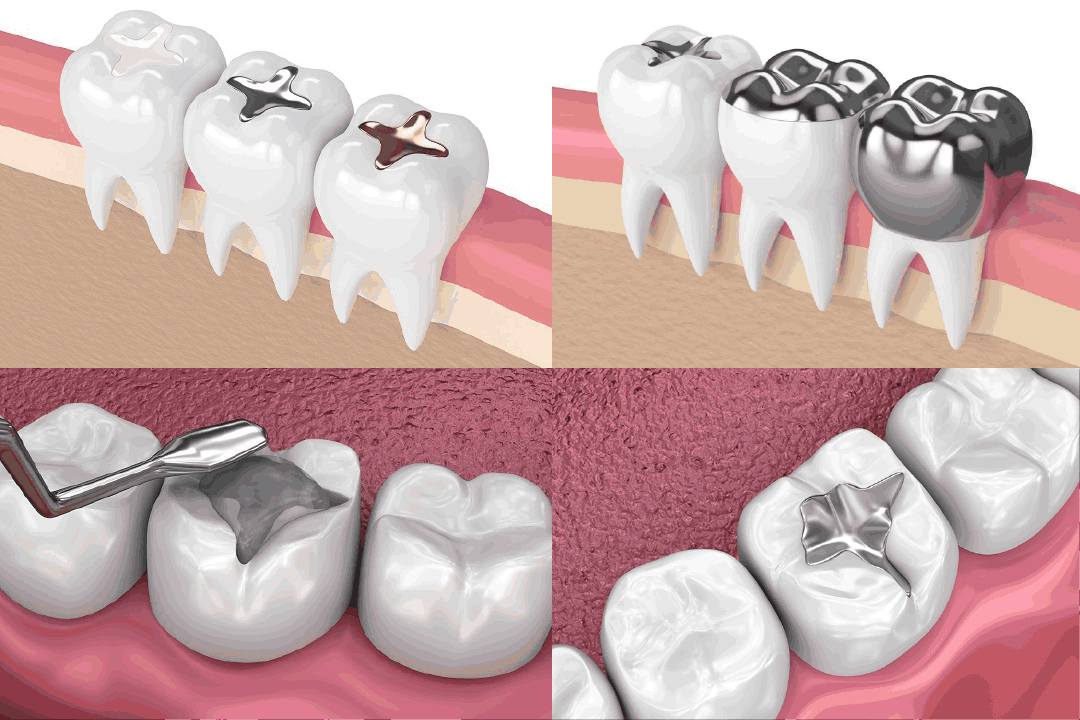
Fillings and Restorations are dental procedures that repair and restore teeth damaged by decay, wear, or trauma. However, there are some differences between the two:
- Dental Fillings– Dental fillings treat minor to moderate cavities caused by tooth decay (caries). They are a conservative and standard restorative treatment. The procedure involves removing the decayed portion of the tooth and filling the resulting hole with a filling material to restore the tooth’s function and prevent decay. Dental fillings can be made of different materials, such as amalgam (metal alloy), composite resin (tooth-colored filling), porcelain, or glass ionomer.
Tooth-colored composite fillings are popular because they blend with the tooth’s natural color and provide a more aesthetically pleasing final result.
Dental Restorations– Restoring teeth means a broader group of dentistry that includes, in addition to fillings, other more extensive procedures that restore the function and appearance of the tooth. Dental fillings can include dental crowns, inlays, onlays, and bridges in addition to fillings. Dental crowns cover and protect a severely damaged or weakened tooth. They are often recommended when a tooth is undergoing root canal treatment, has a large filling that needs strengthening, or has significant structural damage. Inlays and onlays are indirect fillings used for larger cavities or defects. They are custom-made in a dental laboratory and then glued to the tooth’s surface. Dental bridges replace missing teeth and are attached to neighboring teeth or dental implants.
In summary, dental fillings are used for small to moderate cavities. In contrast, dental fillings cover a more comprehensive range of treatments, including fillings, crowns, inlays, onlays, and bridges, used for more extensive tooth repair and replacement. The choice of treatment depends on the extent of the tooth damage, the damaged tooth’s location, the patient’s oral health, and his preferences. Your dentist will assess your situation and recommend the most appropriate treatment to restore dental health and function.